Constructivism is a Russian artistic movement that included the sculptors Antone Pevsner, Naum Gabo and Vladimir Tatlin. In 1913 Tatlin visited in Paris and was deeply impressed with Picasso's innovations into Cubism and his use of collage. This instigated an intense interest in not only the art styles making their way across Europe, but also in dealing for the first time with the space around the art as an element in its own right.
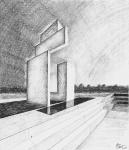 This would later become a real obsession with the Constructivists. Many experiments would be made with presence and lack of presence of any given material, and in various conditions. They worked in the years 1917 until 1920, and they made sculptures from glass, wood and plastic that hung down from the ceiling. In relation to the industrial changes going on, this group desired to make art that reflected the times. In 1920 Gabo published his” Realistic Manifesto” that would later influence many other artistic groups working in Europe . Unlike Tatlin, who would become a devotee of the Russian Revolution and all it stood for, Gabo believed that art should have a tangible function in society, and that this function should remain entirely independent from the social or political values of its day. Tatlin would go own to produce art that glorified the socialist values of Stalin's oppressive dogma, though his fascination for space would find a new outlet in the form of architecture. As for Gabo's theory, the De Stijls in Holland would be greatly influenced by it, in Germany the Bauhaus school began to teach the text and in France the “Abstraction-creation” group adopted the Constructivism creed. The art was meant to be non-figurative and reminiscent in shape of industrial characteristics.
